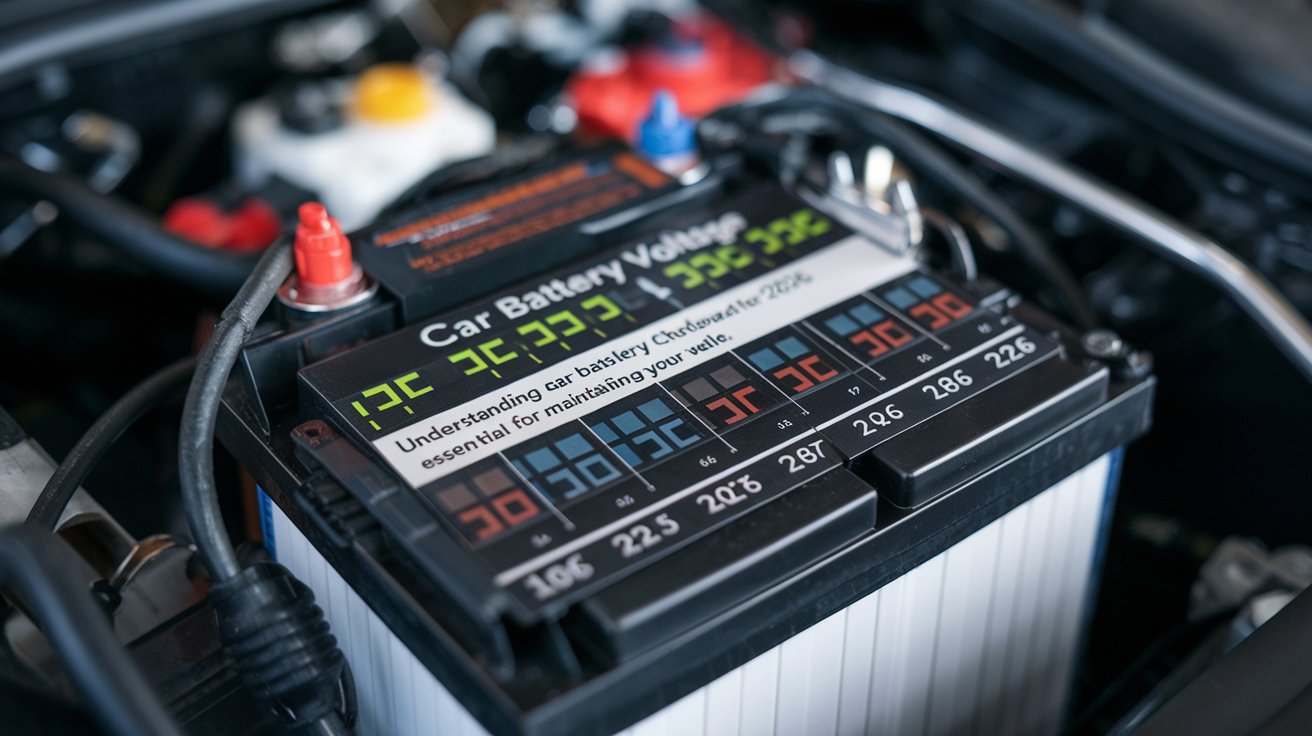
Understanding your car battery voltage chart is essential for maintaining vehicle reliability and preventing unexpected breakdowns. A standard 12-volt car battery actually operates between 12.4 and 14.4 volts depending on its charge state and whether the engine is running. This comprehensive guide provides accurate voltage readings, diagnostic benchmarks, and troubleshooting insights to help United States drivers assess battery health and performance in 2026.
What Is Battery Voltage and Why It Matters
Battery voltage represents the electrical potential difference that powers your vehicle’s starting system, lights, electronics, and accessories. A fully charged 12V car battery measures approximately 12.6 to 12.8 volts when the engine is off and the battery has rested for several hours. This voltage reading indicates the battery’s state of charge and overall health. When voltage drops below 12.4 volts, the battery is considered partially discharged, and readings below 12.0 volts suggest the battery needs immediate charging or replacement.
The voltage measurement provides critical diagnostic information about battery condition, charging system performance, and electrical system health. Modern vehicles in the United States rely on consistent electrical power for computerized engine management, safety systems, and entertainment features. Monitoring battery voltage helps prevent failures, extends battery lifespan, and ensures reliable vehicle operation throughout the battery’s typical 3-5 year service life in American climate conditions.
Normal Car Battery Voltage Ranges
Understanding normal battery voltage ranges helps you accurately assess your battery’s condition and charging system performance across different operating states.
Battery Voltage When Car Is Off
When your vehicle is off and the battery has rested for at least 2 hours, a healthy 12-volt battery should read between 12.6 and 12.8 volts. This resting voltage represents the battery’s true state of charge without influence from the charging system or electrical loads. A reading of 12.4 volts indicates approximately 75% charge, while 12.2 volts suggests only 50% capacity remains. If your battery voltage when the car is off measures below 12.0 volts, the battery is significantly discharged and may struggle to start the engine, especially in cold weather conditions common across northern United States regions during winter months.
The resting voltage provides the most accurate assessment of battery state of charge because surface charge has dissipated and the battery’s true chemical condition is revealed. Many automotive experts recommend checking this voltage monthly to track battery health trends and predict potential failures before they leave you stranded.
Battery Voltage When Car Is Running
With the engine running, your vehicle’s alternator charges the battery, and normal battery voltage when the car is running should measure between 13.7 and 14.7 volts. This elevated voltage indicates the charging system is functioning properly and replenishing the battery’s charge while powering the vehicle’s electrical systems. Most modern vehicles maintain charging voltage around 14.2 to 14.4 volts under normal operating conditions. If voltage exceeds 14.8 volts, the voltage regulator may be malfunctioning and overcharging the battery, which can damage internal components and shorten battery life.
Conversely, if voltage when running stays below 13.5 volts, the alternator may be failing or the drive belt could be slipping, preventing adequate charging. United States automotive technicians recommend testing running voltage with headlights and accessories on to verify the charging system can handle typical electrical loads while maintaining proper voltage output.
Battery Voltage When Starting
During engine cranking, car battery voltage when starting temporarily drops as the starter motor draws significant current, typically 150-300 amps for gasoline engines. A healthy battery should maintain voltage above 9.6 volts during cranking, even under heavy load. If voltage drops below 9.0 volts during starting attempts, the battery likely has insufficient capacity or internal damage preventing it from delivering adequate starting power. This condition becomes more pronounced in cold weather, where battery capacity naturally decreases and engine oil viscosity increases starting resistance.
Modern diagnostic equipment can measure cranking voltage to assess battery performance under load, providing more accurate health assessment than simple resting voltage measurements. This dynamic testing reveals weak cells or internal resistance that may not appear in static voltage readings.
Complete 12V Car Battery Voltage Chart
This comprehensive car battery voltage chart for 12-volt systems shows the relationship between voltage readings and battery state of charge, helping you accurately interpret diagnostic measurements.
Lead-Acid Battery Voltage Chart
Traditional lead-acid car batteries remain the most common automotive battery type in the United States, found in millions of vehicles manufactured before 2020. At 12.8 volts, a lead-acid battery is 100% charged; at 12.6 volts it holds approximately 90% charge; at 12.4 volts the battery is at 75% capacity; at 12.2 volts only 50% charge remains; at 12.0 volts the battery is 25% charged; and at 11.8 volts or below, the battery is considered discharged and requires immediate charging to prevent sulfation damage that permanently reduces capacity.
The voltage-to-charge relationship for lead-acid batteries is relatively linear in the middle range but becomes less predictable below 12.0 volts. Allowing lead-acid batteries to remain in a discharged state accelerates plate sulfation, where lead sulfate crystals harden and become irreversible, permanently reducing the battery’s ability to hold charge. This degradation process occurs more rapidly in hot climates found in southern United States states like Arizona, Texas, and Florida, where underhood temperatures regularly exceed 150°F during summer months.
AGM Battery Voltage Chart
AGM (Absorbent Glass Mat) battery voltage characteristics closely mirror traditional lead-acid batteries, with fully charged voltage at 12.8-13.0 volts, 75% charge at 12.5 volts, 50% charge at 12.2 volts, and 25% charge at 12.0 volts. However, AGM batteries offer superior performance under load and can maintain higher voltage during cranking compared to conventional flooded batteries. These premium batteries are increasingly common in newer vehicles with start-stop technology, advanced electronics, and higher electrical demands that stress traditional battery designs.
AGM batteries require slightly higher charging voltage for optimal performance, typically 14.4 to 14.8 volts, compared to 13.8 to 14.4 volts for conventional batteries. Many vehicles equipped with AGM batteries from the factory have specially programmed charging systems that recognize battery type and adjust voltage accordingly. Using incorrect charging voltage can reduce AGM battery lifespan and performance, making proper voltage monitoring essential for these premium battery applications.
Lithium-Ion and LiFePO4 Battery Voltage Chart
Lithium-ion batteries operate with distinctly different voltage characteristics than lead-acid types, with a typical 12V lithium battery (actually 4 cells in series) measuring 13.2-13.6 volts when fully charged, 13.0 volts at 75% charge, 12.8 volts at 50% charge, and 12.4 volts at 25% charge. These batteries maintain more consistent voltage throughout the discharge cycle, providing stable power delivery until nearly depleted. The flatter discharge curve means voltage remains relatively high until the battery is substantially discharged, requiring different diagnostic approaches than traditional batteries.
LiFePO4 (Lithium Iron Phosphate) batteries specifically show fully charged voltage around 13.6 volts (3.4V per cell), 90% charge at 13.2 volts, 50% charge at 12.8 volts, and 10% charge at 12.4 volts. These advanced batteries are gaining popularity in performance vehicles, recreational vehicles, and marine applications throughout the United States due to their lighter weight, longer cycle life, and superior cold-weather performance. However, they require specialized charging systems with lithium-compatible voltage profiles and battery management systems to ensure safe operation and maximum lifespan.
How to Measure Car Battery Voltage Accurately
Accurate voltage measurement requires proper technique and equipment to obtain reliable diagnostic information about battery condition and charging system performance.
Use a quality digital multimeter or dedicated battery tester, ensuring the device is set to DC voltage measurement with a range of at least 20 volts. For resting voltage, turn off the engine and all electrical accessories, then wait at least 2 hours for surface charge to dissipate before testing. Connect the red positive probe to the positive battery terminal and the black negative probe to the negative terminal, ensuring clean, tight connections for accurate readings. Record the voltage and compare it to the standard chart values to determine state of charge.
For running voltage testing, start the engine and allow it to reach normal operating temperature, then measure voltage directly at the battery terminals with the engine at idle. Increase engine speed to approximately 2000 RPM and verify voltage rises to the 13.7-14.7 volt range, indicating proper alternator output. Activate electrical loads like headlights, heated seats, and rear defroster while monitoring voltage to ensure the charging system maintains adequate output under typical driving conditions encountered throughout United States road networks.
Car Battery Minimum Voltage to Start Engine
The minimum voltage required to start a car engine depends on several factors including engine size, temperature, oil viscosity, and starter motor condition, but generally requires at least 9.6 volts sustained during cranking. A battery reading 12.0 volts at rest may drop to 10-11 volts during cranking if healthy, successfully starting the engine. However, if resting voltage is already below 12.0 volts, the battery may lack sufficient capacity to maintain adequate voltage during the high current draw of starting, especially in cold weather common across northern United States states during winter months.
Most automotive experts recommend maintaining battery voltage above 12.4 volts to ensure reliable starting under all conditions. Batteries with voltage between 12.0 and 12.4 volts may start the engine under ideal conditions but could fail during cold weather, with aged starter motors, or after extended periods of inactivity. If your battery consistently measures below 12.4 volts after overnight rest, consider charging or replacing it to prevent unexpected starting failures that often occur at the most inconvenient times.
Interpreting Low Battery Voltage Readings
Understanding what low voltage readings indicate helps diagnose battery and charging system problems before they leave you stranded.
Is 12.2 Volts Okay for a Car Battery
A reading of 12.2 volts indicates approximately 50% state of charge, which is below the healthy range and suggests the battery needs charging. While a battery at 12.2 volts may still start the engine under favorable conditions, it lacks adequate reserve capacity for reliable operation. This voltage level indicates either the battery has been partially discharged by electrical loads with the engine off, the charging system is not adequately replenishing the battery during driving, or the battery itself is aging and losing capacity to hold a full charge.
If your battery consistently measures 12.2 volts after charging or driving, the battery likely has reduced capacity due to age, sulfation, or internal damage. Modern vehicles with extensive electronics and computerized systems require fully charged batteries to function properly, and operating with chronically low voltage can cause computer malfunctions, transmission shifting issues, and other electrical problems beyond simple starting difficulties.
Understanding 14.2 Battery Voltage
A voltage reading of 14.2 volts with the engine running is ideal and indicates the charging system is functioning properly. This voltage level falls within the normal charging range of 13.7-14.7 volts and demonstrates the alternator is successfully replenishing battery charge while powering the vehicle’s electrical systems. Most modern vehicles target charging voltage between 14.0 and 14.4 volts under normal operating conditions, making 14.2 volts an excellent indication of proper charging system health.
This charging voltage is carefully regulated by the vehicle’s voltage regulator (often integrated into the alternator in modern designs) to balance the needs of charging the battery without overcharging, which can damage battery plates and boil off electrolyte. If voltage consistently measures significantly above 14.7 volts, the regulator may be malfunctioning and overcharging the battery. Conversely, if running voltage stays below 13.7 volts, alternator output is insufficient and battery charge will gradually deplete during driving.
Factors Affecting Car Battery Voltage
Multiple variables influence battery voltage readings and performance, requiring consideration when interpreting diagnostic measurements.
Temperature significantly impacts battery voltage and capacity, with cold weather reducing battery capacity by up to 50% at 0°F compared to 80°F. This temperature sensitivity explains why batteries that perform adequately in summer often fail during winter cold snaps common throughout northern United States regions. Hot weather also stresses batteries, accelerating chemical reactions that increase self-discharge rates and promote internal corrosion, reducing battery lifespan in southern states where summer temperatures regularly exceed 100°F.
Battery age and condition directly affect voltage readings and performance characteristics. As batteries age beyond 3-4 years, internal resistance increases due to sulfation and grid corrosion, causing voltage to drop more rapidly under load and recover more slowly after charging. Parasitic electrical drains from vehicle electronics, even when the car is off, can gradually discharge the battery if the vehicle sits unused for extended periods. Modern vehicles typically draw 25-50 milliamps when off to maintain computer memory and security systems, which can discharge a battery over several weeks of inactivity.
When to Replace Your Car Battery Based on Voltage
Knowing when voltage readings indicate battery replacement is necessary helps prevent unexpected failures and maintains vehicle reliability.
If your battery consistently measures below 12.4 volts after overnight rest and a full charge cycle, the battery likely has insufficient capacity and should be replaced. Batteries that drop below 12.0 volts within 24 hours of full charging demonstrate excessive self-discharge indicating internal damage or sulfation. Load testing, where voltage is measured while the battery delivers high current, provides more definitive assessment than resting voltage alone. A healthy battery should maintain voltage above 9.6 volts during a 15-second load test at half the cold cranking amp rating.
Age remains a critical factor regardless of voltage readings. Batteries older than 5 years should be considered for replacement even if voltage appears normal, as internal deterioration progresses with age and sudden failure becomes increasingly likely. United States automotive experts recommend replacing batteries proactively at 4-5 years in hot climates and 5-6 years in moderate climates to avoid inconvenient roadside failures. If you experience slow cranking, dimming lights during starting, or require jump-starts even occasionally, replace the battery immediately regardless of age or voltage readings.
Charging System Problems and Voltage Diagnosis
Abnormal voltage readings with the engine running indicate charging system problems requiring prompt attention to prevent battery damage and vehicle breakdown.
If running voltage stays below 13.5 volts at 2000 RPM, the alternator is not generating sufficient output to charge the battery and power electrical systems. Common causes include worn alternator brushes, failing diodes in the alternator rectifier, loose or damaged drive belts, or poor electrical connections at the alternator or battery. Operating with inadequate charging voltage gradually depletes the battery and can leave you stranded when the battery no longer has sufficient charge to start the engine.
Conversely, voltage exceeding 14.8 volts indicates overcharging, typically caused by voltage regulator failure. Overcharging damages battery plates, boils off electrolyte in non-sealed batteries, and can cause battery swelling or leakage in severe cases. Modern batteries are particularly sensitive to overcharging, and sustained high voltage can destroy an expensive AGM or lithium battery within days. If you notice voltage consistently above 14.8 volts, have the charging system inspected immediately at a qualified automotive service facility to prevent costly battery and electrical system damage.
Maintaining Optimal Battery Voltage
Proper maintenance practices help ensure your battery maintains optimal voltage and delivers maximum service life and reliability.
For vehicles driven regularly, the charging system typically maintains adequate battery charge without additional intervention. However, vehicles driven primarily for short trips may not allow sufficient charging time to fully replenish the battery, gradually reducing voltage over time. Consider using a quality battery maintainer or trickle charger for vehicles driven less than 20 minutes per trip or those that sit unused for more than a week. These devices provide slow, controlled charging that maintains optimal voltage without overcharging risk.
Keep battery terminals clean and tight to ensure proper electrical connection and charging efficiency. Corrosion at battery terminals increases resistance, preventing adequate charging current flow and causing voltage drops during starting. Clean terminals annually with a wire brush and baking soda solution, then apply terminal protectant to prevent future corrosion. In vehicles equipped with automatic battery monitoring systems, ensure the system is functioning properly and battery age is correctly programmed, as many modern vehicles adjust charging voltage based on battery age and condition detected by onboard computers.
Related video about car battery voltage chart
This video complements the article information with a practical visual demonstration.
Frequently Asked Questions
Is 12.2 volts okay for a car battery?
A reading of 12.2 volts indicates approximately 50% state of charge, which is below the healthy range for reliable operation. While the battery may start the engine under favorable conditions, this voltage level suggests inadequate charge that could lead to starting problems, especially in cold weather. A healthy battery should measure at least 12.4 volts at rest, and ideally 12.6 volts or higher. If your battery consistently measures 12.2 volts after charging or driving, it likely needs replacement due to reduced capacity from age or internal damage.
What is the normal voltage of a car battery?
The normal voltage of a 12-volt car battery is 12.6 to 12.8 volts when fully charged and at rest (engine off for at least 2 hours). When the engine is running, normal voltage should measure between 13.7 and 14.7 volts, indicating the alternator is properly charging the battery. During engine cranking, voltage temporarily drops but should remain above 9.6 volts in a healthy battery. Voltage readings below 12.4 volts at rest indicate partial discharge, while readings below 12.0 volts suggest the battery needs immediate charging or replacement.
Is 14.2 battery voltage good?
Yes, 14.2 volts is excellent and indicates your charging system is functioning properly. This reading falls within the ideal charging range of 13.7 to 14.7 volts and shows the alternator is successfully replenishing battery charge while powering electrical systems. Most modern vehicles target charging voltage between 14.0 and 14.4 volts under normal operating conditions. This voltage level properly charges the battery without overcharging, which can damage internal components. If you measure 14.2 volts with the engine running, your charging system is operating exactly as designed.
What is a good reading for a 12 volt car battery?
A good reading for a 12-volt car battery is 12.6 to 12.8 volts when the engine is off and the battery has rested for several hours. This voltage indicates full or near-full charge with healthy capacity. When the engine is running, a good reading is 13.7 to 14.7 volts, showing proper alternator output. During cranking, voltage should stay above 9.6 volts. If your battery consistently measures 12.4 volts or higher at rest and the charging system maintains 13.7-14.7 volts when running, your battery and charging system are functioning properly and should provide reliable service.
How many volts is a car battery when fully charged?
A fully charged 12-volt car battery measures 12.6 to 12.8 volts at rest when the engine has been off for at least 2 hours. This resting voltage represents the battery’s true state of charge without influence from the charging system or surface charge. Some battery types show slightly different fully charged voltages: traditional lead-acid batteries read 12.6-12.8 volts, AGM batteries measure 12.8-13.0 volts, and lithium batteries show 13.2-13.6 volts when fully charged. These voltage differences reflect the distinct chemical compositions and charging characteristics of each battery technology.
What is the car battery minimum voltage to start an engine?
The minimum voltage required to start a car engine is approximately 9.6 volts sustained during cranking. A battery at 12.0 volts rest may drop to 10-11 volts during cranking if healthy, which is typically sufficient to start the engine. However, for reliable starting under all conditions, including cold weather, the battery should maintain at least 12.4 volts at rest. Batteries with resting voltage below 12.0 volts often lack sufficient capacity to maintain adequate voltage during the high current draw of starting, especially with cold engines or aged starter motors. Most experts recommend replacing batteries that consistently measure below 12.4 volts to ensure reliable operation.
| Voltage Reading | Battery State | Recommended Action |
|---|---|---|
| 12.6-12.8V (rest) | Fully charged, healthy | Normal operation, monitor regularly |
| 12.4V (rest) | 75% charged, acceptable | Charge if possible, monitor trends |
| 12.2V (rest) | 50% charged, low | Charge immediately, test capacity |
| Below 12.0V (rest) | Discharged, critical | Charge and load test, likely replacement needed |
| 13.7-14.7V (running) | Proper charging | Charging system healthy, no action needed |
| Above 14.8V (running) | Overcharging | Inspect voltage regulator immediately |
| Below 13.5V (running) | Undercharging | Test alternator and drive belt immediately |