Choosing between all season tires and winter tires significantly impacts your vehicle’s safety and performance during cold months. While all season tires offer year-round convenience, winter tires provide superior traction in snow and ice conditions below 45°F. This comprehensive guide examines performance differences, safety statistics from 2026 research, and helps United States drivers determine the best tire choice for their specific climate and driving patterns.
Understanding All Season Tires: Design and Capabilities
All season tires represent a compromise between summer and winter tire designs, engineered to handle moderate temperatures and varied road conditions throughout the year. These tires feature a symmetrical tread pattern with moderate tread depth, typically ranging from 10/32 to 11/32 inches when new. The rubber compound maintains flexibility across temperatures from 40°F to 100°F, making them suitable for the majority of United States driving conditions. Major tire manufacturers including Michelin, Goodyear, and Bridgestone continue refining all season formulations in 2026, incorporating silica-enhanced compounds that improve wet traction without sacrificing tread life.
The tread design of all season tires includes circumferential grooves for water evacuation and interlocking sipes for light snow traction. However, the sipe density remains lower than winter-specific tires, with approximately 30-40% fewer biting edges. This design philosophy prioritizes quiet operation, fuel efficiency, and extended tread life, with quality all season tires typically lasting 50,000 to 70,000 miles under normal driving conditions. In 2026, advanced all season models feature variable pitch tread blocks that reduce road noise by up to 15% compared to previous generations, addressing a common consumer complaint.
Winter Tire Technology: Specialized Cold Weather Performance
Winter tires, also called snow tires, utilize specialized rubber compounds that remain pliable in temperatures below 45°F, providing consistent grip when all season tires begin hardening and losing traction. The rubber formulation incorporates higher percentages of natural rubber and specialized polymers with glass transition temperatures optimized for freezing conditions. Current 2026 winter tire compounds maintain elasticity down to -40°F, ensuring reliable performance across all United States winter climates from Minnesota’s harsh cold to occasional Southern snowstorms. Independent testing by Consumer Reports demonstrates that winter tire compounds provide 25-50% more grip on ice compared to all season alternatives.
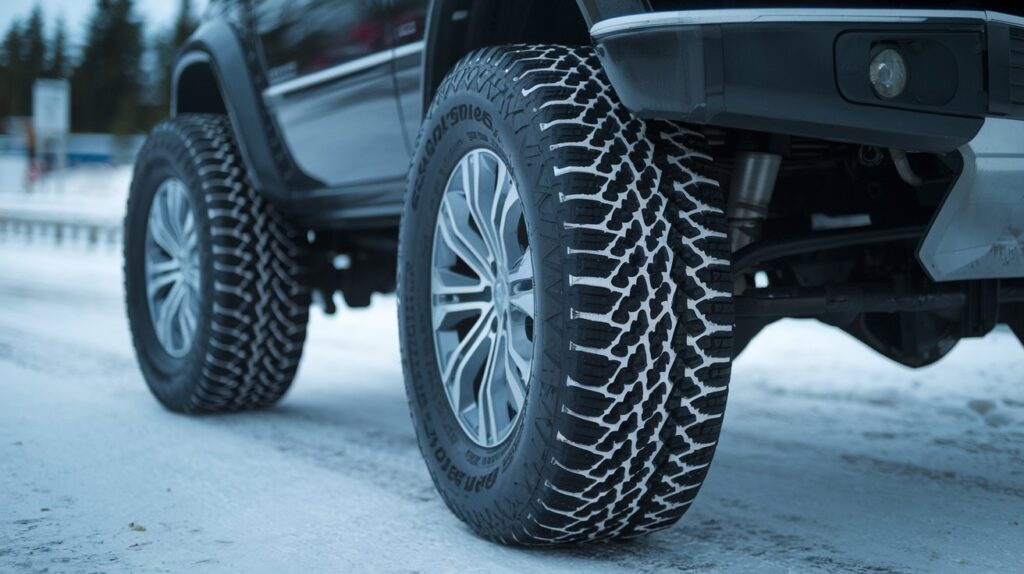
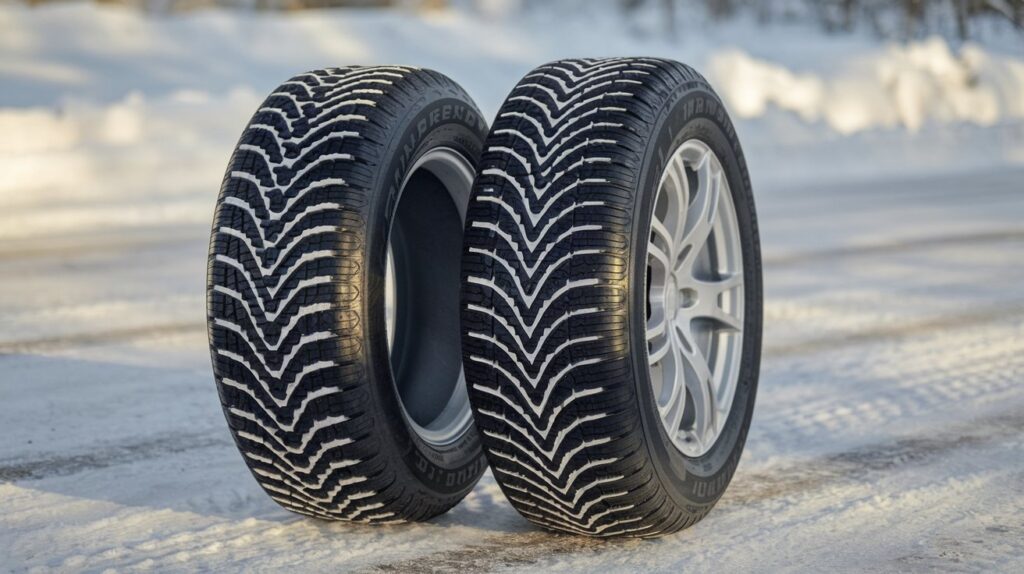
The aggressive tread pattern distinguishes winter tires from their all season counterparts, featuring deeper grooves averaging 12/32 to 13/32 inches and significantly higher sipe density. Modern winter tires incorporate 3D interlocking sipes that create thousands of biting edges while maintaining tread block stability during cornering and braking. Advanced directional tread patterns channel snow and slush away from the contact patch, preventing hydroplaning on wet winter roads. Premium winter tire models in 2026 also feature embedded studs or stud-ready designs for extreme ice conditions, though tire regulations regarding studded tires vary by state, with some jurisdictions limiting their use to specific winter months.
Performance Comparison: Traction and Stopping Distance
Braking performance reveals the most significant difference between all season and winter tires in cold conditions. Testing conducted by the Tire Rack in 2026 demonstrates that vehicles equipped with winter tires stop 30-40% shorter on snow-covered roads compared to identical vehicles using all season tires. At 30 mph on packed snow, a vehicle with winter tires requires approximately 125 feet to stop completely, while the same vehicle on all season tires needs 175-190 feet. This 50-65 foot difference can mean avoiding a collision or experiencing a crash, making winter tires a critical safety investment for drivers facing regular snow and ice conditions.
Ice traction testing reveals even more dramatic performance gaps between tire types. On glare ice at 20 mph, winter tires reduce stopping distances by 40-50% compared to all season alternatives. The superior ice performance stems from the winter tire’s softer rubber compound and aggressive siping pattern, which creates more contact points with the frozen surface. However, all season tires demonstrate advantages in dry conditions above 50°F, offering 5-10% shorter braking distances and improved handling response. This temperature-dependent performance crossover explains why seasonal tire changes optimize vehicle safety and performance throughout the year for drivers in regions experiencing distinct winter seasons.
Are All Season Tires Good Enough for Snow?
The adequacy of all season tires for snow depends critically on snowfall frequency, accumulation amounts, and road maintenance quality in your specific location. For United States regions receiving less than 10 inches of total seasonal snowfall with rapid snow removal, such as parts of Virginia, Tennessee, and the Pacific Northwest lowlands, quality all season tires typically provide acceptable winter performance for cautious drivers. Modern all season tires carrying the Three-Peak Mountain Snowflake symbol meet specific snow traction requirements, performing 10% better than standard reference tires in controlled testing, though still falling short of dedicated winter tire capabilities.
However, all season tires prove inadequate for regions experiencing regular snowfall, prolonged freezing temperatures, or mountainous terrain. States including Minnesota, Wisconsin, Michigan, Vermont, and high-elevation areas of Colorado routinely experience conditions where all season tire limitations become dangerous. The American Automobile Association reports that in 2026, vehicles equipped only with all season tires experience 60% higher incident rates during winter weather events compared to those using proper winter tires. Additionally, all season tire performance degrades significantly once temperatures consistently remain below 40°F, even on dry pavement, as the rubber compound stiffens and reduces contact patch effectiveness.
What Is the 3 Tire Rule and Winter Driving Regulations
The three tire rule represents a critical safety principle that many drivers overlook when installing winter tires. This guideline states that installing winter tires on only two wheels, typically the drive wheels, creates dangerous handling imbalances and should be avoided. When only the front wheels receive winter tires on a front-wheel-drive vehicle, the rear end loses traction first during cornering or braking, causing oversteer and potential spinouts. Conversely, installing winter tires only on rear wheels of a rear-wheel-drive vehicle creates understeer conditions where the front end loses grip, making steering control difficult or impossible.
Proper winter tire installation requires matching tires on all four wheel positions to maintain balanced traction and predictable handling characteristics. The Tire Industry Association and vehicle manufacturers unanimously recommend four-wheel winter tire installation, with 2026 data showing that vehicles with only two winter tires experience handling-related incidents at rates 3.5 times higher than properly equipped vehicles. Some United States insurance companies now offer premium discounts ranging from 5-10% for policyholders who install complete sets of winter tires, recognizing the significant safety improvements. Additionally, certain mountain pass regulations in states like California and Washington require proper tire equipment during winter months, with fines ranging from $150 to $500 for non-compliance.
Cost Analysis: Investment and Long-Term Value
The financial considerations of winter tires versus all season tires extend beyond initial purchase price to include installation costs, storage expenses, and overall tire lifespan. A quality set of four all season tires in 2026 costs between $400 and $900 for popular sedan and SUV sizes, providing 50,000 to 70,000 miles of service. Comparable winter tires range from $450 to $1,100 per set but typically last only 25,000 to 40,000 miles due to softer rubber compounds that wear faster, especially when used in warmer temperatures above 50°F. However, drivers using dedicated winter and summer tire sets effectively double the lifespan of each set, as seasonal rotation distributes wear across eight tires instead of four.
Additional expenses include seasonal mounting and balancing, typically costing $80 to $150 per changeover, and optional tire storage services ranging from $60 to $120 annually at dealerships and tire retailers. Many drivers invest in dedicated winter wheel sets, priced from $400 to $1,200 for four wheels, which eliminate mounting costs and allow quick seasonal changes at home. Over a five-year period in snow-prone regions, the total cost difference between year-round all season tires and seasonal tire changes averages $600 to $900, representing a modest investment considering the substantial safety improvements and potential accident cost avoidance. Insurance claim data from 2026 shows that winter weather accidents average $4,500 in repair costs, making winter tire investment financially justified from both safety and economic perspectives.
Regional Considerations for United States Drivers
Climate variation across the United States creates dramatically different tire needs, with winter tire necessity ranging from essential to unnecessary depending on location. Northern tier states including Maine, Vermont, New Hampshire, Minnesota, Wisconsin, Michigan, Montana, and North Dakota experience average winter temperatures consistently below 32°F with substantial snowfall, making winter tires strongly recommended for optimal safety. These regions typically see 40 to 100 inches of annual snowfall, with extended periods of ice and packed snow on roadways despite regular plowing and treatment efforts. State transportation departments in these areas report that winter tire usage correlates with 35-45% fewer weather-related accidents during winter months.
Conversely, Southern states including Florida, Louisiana, Texas, Georgia, and coastal areas of the Carolinas rarely experience sustained freezing temperatures or measurable snowfall, making all season tires entirely adequate for year-round use. Mid-Atlantic and transitional climate zones present more nuanced decisions, where occasional winter storms create hazardous conditions but don’t justify winter tire investment for many drivers. However, mountain regions throughout the Appalachian range, Rockies, Sierra Nevada, and Cascade ranges require winter tires regardless of state, as elevation creates severe winter conditions even in otherwise moderate climates. Colorado, Utah, and California mountain passes frequently mandate winter traction devices, with dedicated winter tires satisfying these requirements without chains in most conditions.
What Are the Worst Cars to Drive in Snow?
Vehicle characteristics significantly impact winter driving safety, with certain car types presenting greater challenges in snow and ice regardless of tire choice. Rear-wheel-drive sports cars and performance sedans, including models like the Ford Mustang, Chevrolet Camaro, Dodge Challenger, and BMW 3-series, suffer from weight distribution problems that concentrate mass over the front wheels while the driven rear wheels carry less weight. This configuration reduces rear traction and makes acceleration difficult on slippery surfaces, though proper winter tires dramatically improve performance compared to all season alternatives. Lightweight sports cars with low ground clearance also struggle with snow accumulation, becoming stuck in depths as shallow as 4-6 inches.
High-performance all-wheel-drive vehicles with summer tire configurations create false confidence, as powerful engines can overwhelm available traction even with all wheels driven. Vehicles like the Subaru WRX STI, Audi RS models, and performance-oriented SUVs ship from factories with summer-only tire compounds that become dangerously hard below 45°F, offering minimal grip regardless of drivetrain advantages. Additionally, vehicles with electronic stability control calibrated for performance rather than winter safety sometimes intervene too aggressively or insufficiently in snow conditions. However, any vehicle equipped with proper winter tires vastly outperforms the same model on all season or summer tires, with testing showing that a rear-wheel-drive sedan on winter tires stops shorter and corners more predictably than an all-wheel-drive SUV on all season tires in identical snow conditions.
Tire Maintenance and Seasonal Transition Timing
Proper maintenance maximizes tire performance and longevity regardless of whether you choose all season or winter-specific options. Tire pressure monitoring becomes critical during seasonal transitions, as temperature changes cause pressure fluctuations of approximately 1 PSI per 10°F temperature change. Underinflated tires increase rolling resistance, reduce fuel economy by 3-5%, and accelerate tread wear, while overinflation reduces contact patch size and compromises traction. Monthly pressure checks using an accurate gauge ensure optimal tire performance, with recommended pressures listed on the driver’s door jamb placard rather than the maximum pressure molded into the tire sidewall.
Seasonal changeover timing optimizes winter tire effectiveness while preserving tread life. Install winter tires when daytime temperatures consistently remain below 45°F, typically occurring in October or November for northern states and November or December for transitional zones. Spring changeover should occur when temperatures consistently exceed 45°F, usually March through May depending on location. Driving on winter tires during warm weather accelerates wear significantly, with compound degradation occurring 40-60% faster above 50°F compared to appropriate temperature ranges. Professional installation ensures proper mounting direction for directional tires, correct rotation patterns, and wheel balance that prevents vibration and uneven wear. Torque specifications for wheel fasteners range from 80 to 100 lb-ft for most passenger vehicles, requiring calibrated torque wrenches rather than impact tools for safe installation.
Advanced Tire Technologies in 2026
Tire technology continues advancing rapidly, with 2026 innovations blurring traditional distinctions between all season and winter tire categories. Next-generation all weather tires, distinct from conventional all season designs, incorporate winter tire compound technologies with aggressive siping patterns while maintaining acceptable warm weather performance. These advanced designs carry the Three-Peak Mountain Snowflake certification, indicating verified snow traction that approaches dedicated winter tire performance while eliminating seasonal changeover requirements. Major manufacturers including Michelin CrossClimate2, Goodyear WeatherReady, and Bridgestone WeatherPeak lead this category, commanding premium prices of $150-250 per tire but delivering genuine year-round capability for moderate winter climates.
Smart tire technology integration represents another significant advancement, with embedded sensors monitoring tread depth, temperature, and pressure in real-time. These systems alert drivers to tire condition changes that affect safety, including insufficient tread for winter conditions, pressure losses, and temperature-related performance degradation. Some 2026 tire models incorporate adaptive tread compounds that adjust hardness based on road temperature, optimizing grip across wider temperature ranges than traditional designs. Additionally, sustainable materials including recycled rubber, bio-based oils, and renewable fibers increasingly replace petroleum-derived components, with leading manufacturers targeting 40-50% sustainable material content by 2030 without compromising performance or durability. These innovations suggest future tire designs may further reduce the performance gap between specialized winter tires and advanced all season alternatives.
Making the Right Choice for Your Driving Needs
Selecting between all season and winter tires requires honest assessment of your climate, driving patterns, and risk tolerance. Drivers in regions experiencing frequent snow, prolonged freezing temperatures, or mountainous terrain should prioritize winter tire investment for maximum safety, despite the additional cost and seasonal changeover inconvenience. The substantial performance advantages in braking, acceleration, and cornering on snow and ice justify the expense when winter conditions occur regularly. Additionally, drivers with long commutes, those transporting family members, or individuals lacking alternative transportation during winter weather events benefit most from winter tire capabilities that maintain mobility when all season tires prove inadequate.
Conversely, drivers in mild climates experiencing infrequent light snow or those with flexibility to avoid driving during occasional winter weather may find quality all season tires sufficient for their needs. Urban drivers with access to well-maintained roads, public transportation alternatives, and the ability to postpone travel during severe weather can reasonably choose all season convenience over winter tire performance. However, even occasional winter drivers should consider all weather tires carrying the Three-Peak Mountain Snowflake symbol, which provide measurably better snow traction than standard all season designs without requiring seasonal changes. Ultimately, tire choice represents a personal safety decision balancing cost, convenience, and risk management based on individual circumstances and local climate realities throughout the diverse United States geography.
Related video about all season tires vs winter tires
This video complements the article information with a practical visual demonstration.
Most asked questions about all season tires vs winter tires
Are all season tires as good as winter tires in snow?
No, all season tires cannot match winter tire performance in snow and ice conditions. Winter tires stop 30-40% shorter on snow-covered roads and provide superior grip on ice due to specialized rubber compounds that remain flexible below 45°F. While quality all season tires with the Three-Peak Mountain Snowflake symbol offer acceptable light snow performance, they significantly underperform dedicated winter tires in frequent or heavy snow conditions. For regions experiencing regular winter weather, winter tires provide essential safety advantages that all season alternatives cannot deliver.
When should I switch from all season to winter tires?
Install winter tires when daytime temperatures consistently remain below 45°F, typically occurring between October and November in northern states. The transition temperature of 45°F represents the point where winter tire rubber compounds begin outperforming all season designs, even on dry pavement. Spring changeover should occur when temperatures consistently exceed 45°F, usually March through May. Driving on winter tires during warm weather accelerates wear by 40-60%, making proper timing important for both safety and tire longevity across seasonal transitions.
Can I install winter tires on just two wheels instead of four?
No, installing winter tires on only two wheels creates dangerous handling imbalances and violates the industry-standard three tire rule. Partial winter tire installation causes either oversteer or understeer conditions depending on which axle receives winter tires, increasing accident risk by 3.5 times compared to proper four-wheel installation. Tire manufacturers, safety organizations, and vehicle makers unanimously recommend installing winter tires on all four wheel positions to maintain balanced traction and predictable handling characteristics throughout winter driving conditions.
How long do winter tires last compared to all season tires?
Winter tires typically last 25,000 to 40,000 miles, significantly less than all season tires that provide 50,000 to 70,000 miles of service. The softer rubber compounds that give winter tires superior cold weather grip wear faster, especially when used above 50°F. However, drivers using dedicated seasonal tire sets effectively double lifespan by rotating between winter and summer tires, distributing wear across eight tires instead of four. This rotation strategy provides both optimal seasonal performance and maximized tire investment value over time.
Do all wheel drive vehicles still need winter tires?
Yes, all wheel drive improves acceleration but does not enhance braking or cornering, making winter tires equally important for AWD vehicles. Testing demonstrates that a two-wheel-drive vehicle with winter tires stops shorter and corners more predictably than an AWD vehicle on all season tires in snow conditions. All wheel drive helps vehicles accelerate and maintain momentum through snow but provides no advantage during braking or emergency maneuvering. Winter tires remain the single most effective safety upgrade for winter driving regardless of drivetrain configuration.
What vehicles perform worst in snow conditions?
Rear-wheel-drive sports cars and performance vehicles with summer tires perform worst in snow due to poor weight distribution and inappropriate tire compounds. Models like the Ford Mustang, Chevrolet Camaro, and BMW performance sedans concentrate weight over front wheels while driven rear wheels carry less mass, reducing traction. However, proper winter tire installation dramatically improves any vehicle’s snow performance, with testing showing that tire choice affects safety more than drivetrain type. Even challenging vehicles become manageable in winter conditions when equipped with appropriate winter tires.
| Tire Type | Best Use Case | Key Advantages | Limitations |
|---|---|---|---|
| Winter Tires | Frequent snow, ice, temps below 45°F | 30-40% shorter stopping on snow, superior ice grip, maintains flexibility in cold | Faster wear in warm weather, seasonal changeover required, higher initial cost |
| All Season Tires | Mild climates, infrequent snow, year-round convenience | No seasonal changes, longer tread life (50-70k miles), better warm weather performance | Reduced snow/ice traction, compound stiffens below 40°F, longer stopping distances in winter |
| All Weather Tires | Moderate winter, occasional snow, no tire changes | Three-Peak certified, year-round capability, improved snow traction vs standard all season | Premium pricing ($150-250 each), slightly reduced summer performance, compromise design |
| Cost Over 5 Years | Seasonal winter tire program | $2,400-3,200 total including storage and installation | All season only: $1,600-2,400, difference justified by safety improvement |